Round vs. Square Porch Columns: How the Choice Changes the Look
August 11, 2026

Quick Answer: Round columns trace back to Greek and Roman temple architecture and read as formal, classical, and a little grand — they're the natural match for Colonial, Greek Revival, Neoclassical, and Victorian homes. Square columns read as grounded, sturdy, and unfussy, which is why they show up so often on Craftsman bungalows, farmhouses, and contemporary builds. Structurally, the two shapes carry a load the same way, so the decision is almost entirely about how the front of your house will look and feel. Diameter still matters more than shape: a widely used rule of thumb calls for roughly one inch of column diameter for every foot of height, and anything thinner starts to look flimsy no matter which shape you pick. Material matters too, since fiberglass, wood, aluminum, and cast-stone-look composites each come in both round and square profiles but behave differently outdoors over time.
You're standing on the porch with a tape measure in one hand and a paint chip in the other, and the old posts are already down. Maybe they rotted at the base, maybe you're just tired of how flat and builder-grade they looked, but now there's a gap where the roof needs support and a decision that's bigger than it seemed an hour ago. Round or square isn't a minor finish choice. It changes the whole face of the house — the way light falls across the porch, the shadow lines under the roof, whether the place reads as a cottage or a manor from the curb.
Most homeowners don't think about column shape until they're standing in exactly this spot. The columns holding up your roofline do more visual work than almost any other single element on the exterior, because they sit right at eye level and frame everything behind them. Get the shape wrong for the house style and it looks off in a way that's hard to name. Get it right and the porch looks like it was always meant to look that way.
What Round Columns Actually Do to a Porch
Round columns are the shape people picture when they think "column" at all, and that's not an accident. The form comes straight from Greek and Roman temple building, later organized into the classical orders — Tuscan, Doric, Ionic, and Corinthian — that architects have used as a design vocabulary for roughly five centuries. A round shaft catches light differently than a flat-sided post; it curves continuously, so shadows move across it in a soft gradient rather than a hard break. That's part of why round columns read as more formal and more finished, even at a modest scale.
Where They Fit Best
Round columns complement Colonial, Greek Revival, Neoclassical, and Victorian homes, while also fitting modern designs with classical influences. Homes featuring symmetrical windows, centered entrances, and formal rooflines especially benefit from round columns because they naturally reinforce balanced architectural character.
Style Options Within “Round”
Round columns offer considerable design flexibility through smooth or fluted shafts, straight profiles, and tapered forms. Fluting creates vertical texture, while tapering adds visual lift. These options allow homeowners to coordinate columns with anything from Greek Revival to Corinthian-inspired architecture.
The Trade-Off
Round columns typically cost more than square designs because curved surfaces require additional tooling, manufacturing, and finishing work. They may also feel overly decorative on highly geometric homes, particularly contemporary facades dominated by straight lines, rectangular forms, and minimalist architectural details.
What Square Columns Actually Do to a Porch
Square columns carry a completely different message. Where round columns borrow from temple architecture, square posts feel more like structural carpentry — like something a builder put there because it needed to hold weight, not because a pattern book called for it. That reads as honest and unpretentious, which is exactly the mood a lot of homeowners want.
Best matches
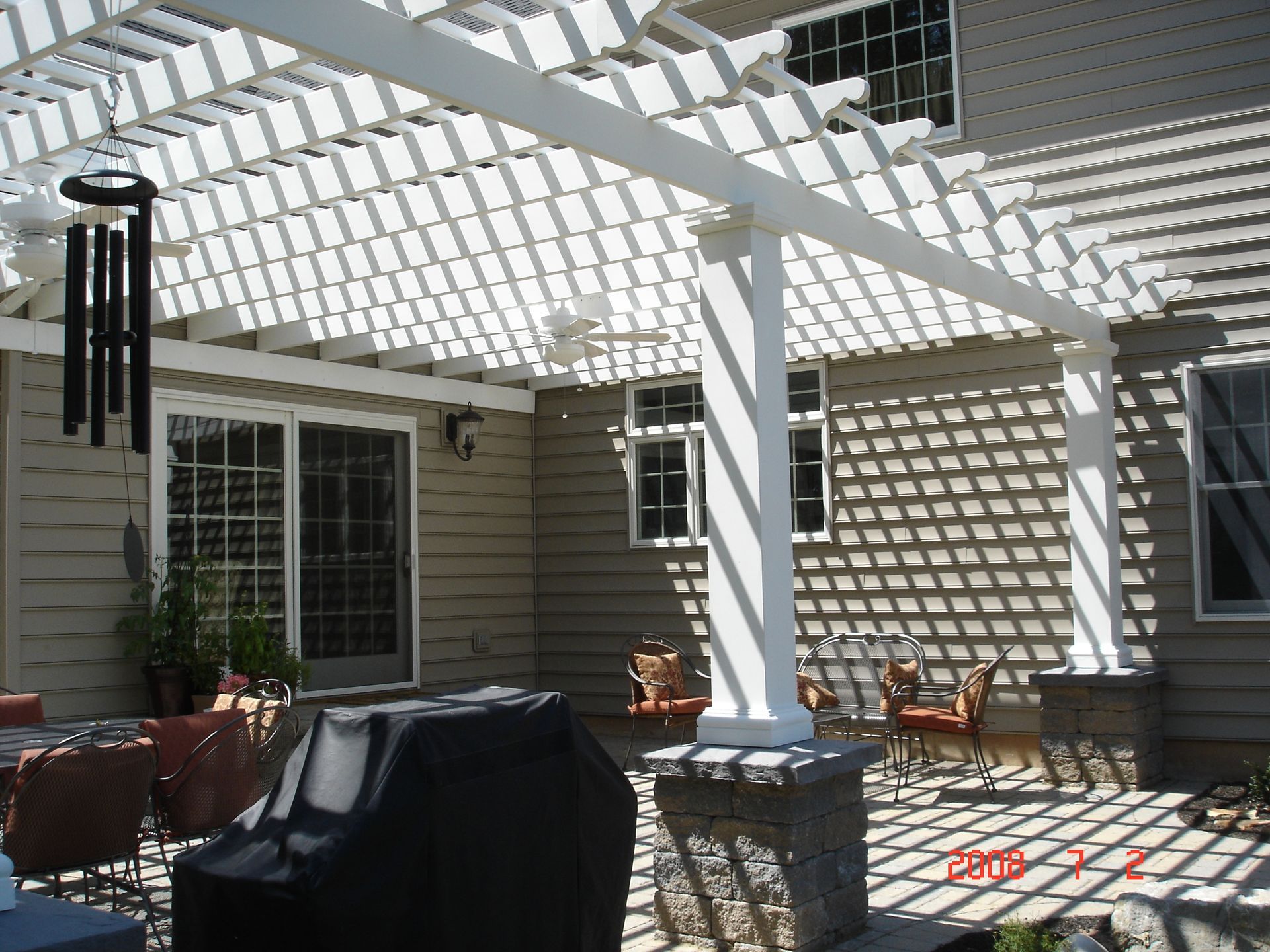
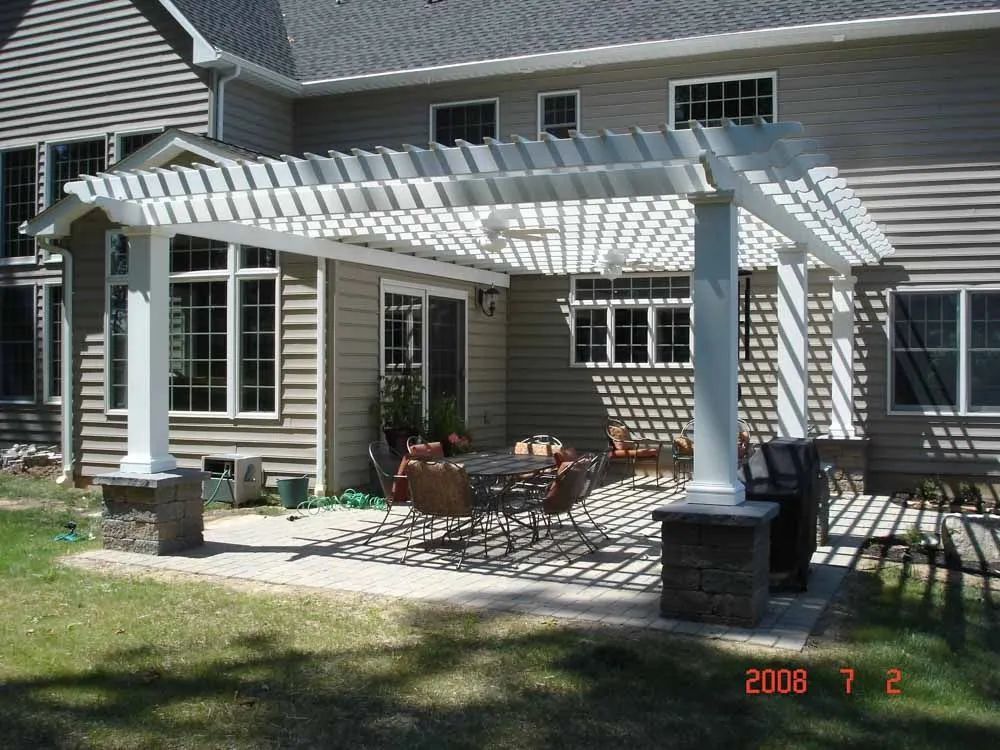
Square columns are the default for Craftsman and bungalow-style homes, where thick, tapered square posts sitting on stone or brick piers are practically a signature of the style. They also suit farmhouse exteriors, where a heavier, slightly rougher square post fits the "substantial and weathered" look the style is known for, and they work naturally on contemporary homes with clean, geometric lines. And they're common on Colonial homes too, just in a slimmer, straighter form than their Craftsman cousins — Colonial square columns tend to look tidy and restrained rather than chunky.
Square posts are also simply easier to build and finish, which is part of why they became the default choice through so much of the 20th century. Fewer curved surfaces means fewer places for water to pool at joints, and flat faces are easier to trim, wrap, or box around an existing structural post.
A practical note worth mentioning
Square columns have corners, and corners have edges. On a porch where small kids run laps or a dog cuts corners at full speed, that's a minor but real consideration a rounded shaft doesn't share. It's not a reason to avoid square columns — it's just a detail nobody mentions until someone bangs a hip on one.
Tapered square columns deserve their own mention
A tapered square column, narrower at the capital and wider at the base, is the classic Craftsman move, and it does something clever visually: it makes the column look like it's actively bearing weight, planting itself into the porch rather than just standing there. A straight square column reads more contemporary and architectural, closer to a support beam than a decorative element.
Getting the Proportions Right, Whichever Shape You Choose
Shape gets the attention, but proportion is what actually makes a column look right or wrong. A column that's too thin for its height looks fragile even when it's structurally sound, and one industry-standard rule of thumb — used widely across the millwork and columns trade — calls for roughly one inch of diameter for every foot of column height as a practical minimum for a single, unpaired column. A 9-foot column, by that math, wants to be at least 9 inches in diameter, not 6.
That guideline echoes older classical proportion systems. Historic pattern books set Doric columns at around seven diameters in height and Ionic columns closer to nine, meaning a Doric column is visibly stockier than an Ionic one built to the same height — the ratio itself is part of what defines the order. Round or square, the same logic applies: proportion, not shape, is usually what separates a porch that looks substantial from one that looks like an afterthought.
Tip: If you're replacing old porch posts, don't default to matching their exact diameter. Builders in past decades often undersized porch supports, and a slightly thicker column, sized to the one-inch-per-foot guideline, will usually look more correct than an exact match to what was there before.
Carpentry writers have made a related point that's easy to miss: a 4×4 post might be perfectly capable of holding up a light porch roof, but it almost always looks too thin once it's standing there in real life, lacking any sense of solidity. That's a visual complaint, not a structural one, and it applies to both round and square shapes. A 6×6 reads far more settled than a 4×4, even when the load calculation says either one would work.
Scale also has to relate to the rest of the house. A single-story ranch with a low roofline calls for shorter, stockier columns than a two-story Colonial with a tall entry portico, and columns that are correctly sized for the house next door can look wrong on yours simply because the roof height is different. This is one part of the process where measuring the actual porch — height, span, and roof load — beats guessing from a photo online.
Material and Durability Considerations Tied to the Choice
Shape and material are two separate decisions, but they interact more than people expect. Round and square shapes are both available in essentially every material on the market, so the shape decision doesn't lock you into a material — but some materials handle certain shapes, sizes, and finishes better than others.
Wood
Wood offers extensive customization with smooth, fluted, tapered, or detailed profiles. Paint-grade and natural-finish options suit traditional homes, but exterior wood requires regular maintenance to protect against moisture, rot, and weathering.
Fiberglass
Fiberglass columns resist moisture, insects, and rot while requiring relatively little maintenance. Available in round and square profiles, engineered load-bearing options work well for residential porches, porticos, and larger exterior applications.
Aluminum
Aluminum columns offer durability, easy maintenance, and attractive powder-coated finishes that resist fading and chipping. Decorative capitals and bases provide classical detailing, while readily available sizes can simplify replacement and installation projects.
Durastone
Durastone combines polymer resin and limestone dust for a substantial stone-like appearance without the weight of traditional stone. Available load-bearing options make it suitable for both decorative and structural porch column applications.
Warning: Don't assume every material is available in every diameter, taper, and finish combination you have in mind. A heavily tapered, deeply fluted round column, for instance, isn't something every material handles equally well, and locking in a shape and a finish before confirming what a given material can actually produce is a common source of mid-project frustration. Check the specific product line before you commit to a design.
There's also a practical middle path worth knowing about: column wraps. Instead of replacing a structural post outright, a two-piece wrap fits around the existing support and gives it the finished look of a real column, round or square, without touching the framing underneath. It's a smaller job, and for porches where the structural post is sound but ugly, it's often the more sensible route.
Mixing Details Without Losing the Look
Column shape isn't the only variable in play. Fluted versus smooth shafts change the texture and light play on either round or square columns, and capital and base styles borrowed from the Tuscan, Doric, Ionic, or Corinthian orders can dress up a round column considerably, from the plain simplicity of Tuscan to the leaf-carved detail of Corinthian. Square columns can carry classical capitals too, though the effect reads differently, more architectural trim than temple facade.
One thing worth saying plainly: there's no rule that says every column shape has to match the house style exactly, but breaking from the expected pairing on purpose reads very differently than doing it by accident. A round column on a Craftsman bungalow can work if it's part of a deliberate, more formal design update. The same column chosen just because it was available tends to look like a mismatch the moment you step back and look at the whole facade.
Frequently Asked Questions
Are round or square columns more expensive?
Round columns generally cost more than square columns because curved surfaces require more complex manufacturing, tooling, and finishing. Actual pricing depends on material, dimensions, detailing, and installation requirements, so costs can vary significantly between projects.
Can round and square columns both carry structural loads?
Yes. Both round and square columns can carry structural loads when properly engineered. Load-bearing capacity depends primarily on material, dimensions, construction, and engineering specifications rather than shape. Some column products, however, are designed for decorative applications only.
What column shape works best for a Craftsman-style home?
Square tapered columns are traditionally the best match for Craftsman-style homes and bungalows. They often feature substantial bases positioned on brick or stone piers, creating the sturdy, grounded appearance that strongly characterizes classic Craftsman residential architecture.
Do round columns need to be fluted?
No. Round columns can feature either smooth or fluted shafts depending on the desired architectural style. Smooth designs provide a restrained appearance, while fluting adds vertical texture and often creates a more formal, classically inspired look.
How do I know what diameter my porch columns should be?
A common starting guideline is approximately one inch of column diameter for every foot of height. However, roof load, porch proportions, spacing, architectural style, and structural requirements should also influence the final column dimensions selected.
Is it possible to change from square to round columns without rebuilding the whole porch?
Yes, depending on the existing structure. When the underlying structural posts remain sound, appropriately designed column wraps may provide a new visible shape and finish without requiring complete removal or major reconstruction of the porch framing.
Choosing Porch Columns That Complement Your Home
Choosing between round and square porch columns comes down to how well the shape works with your home’s architecture, proportions, and existing exterior details. Round columns bring a softer, more classical presence, while square columns create stronger lines and a grounded appearance. Material, diameter, taper, and finish further influence the result. With 20 years of experience, Columns & Carvings, LLC in Birmingham, AL understands how these details work together to create porch columns that feel balanced and appropriate.
The best column choice should look naturally connected to the house rather than added as a separate decorative feature. Consider the roofline, window proportions, porch height, surrounding trim, and overall architectural character before settling on a shape. Properly proportioned columns can give an entry greater visual weight while preserving the personality already established by the home. Whether the final design is round, square, smooth, fluted, tapered, or straight, thoughtful proportions help the porch remain cohesive and visually comfortable for years.